

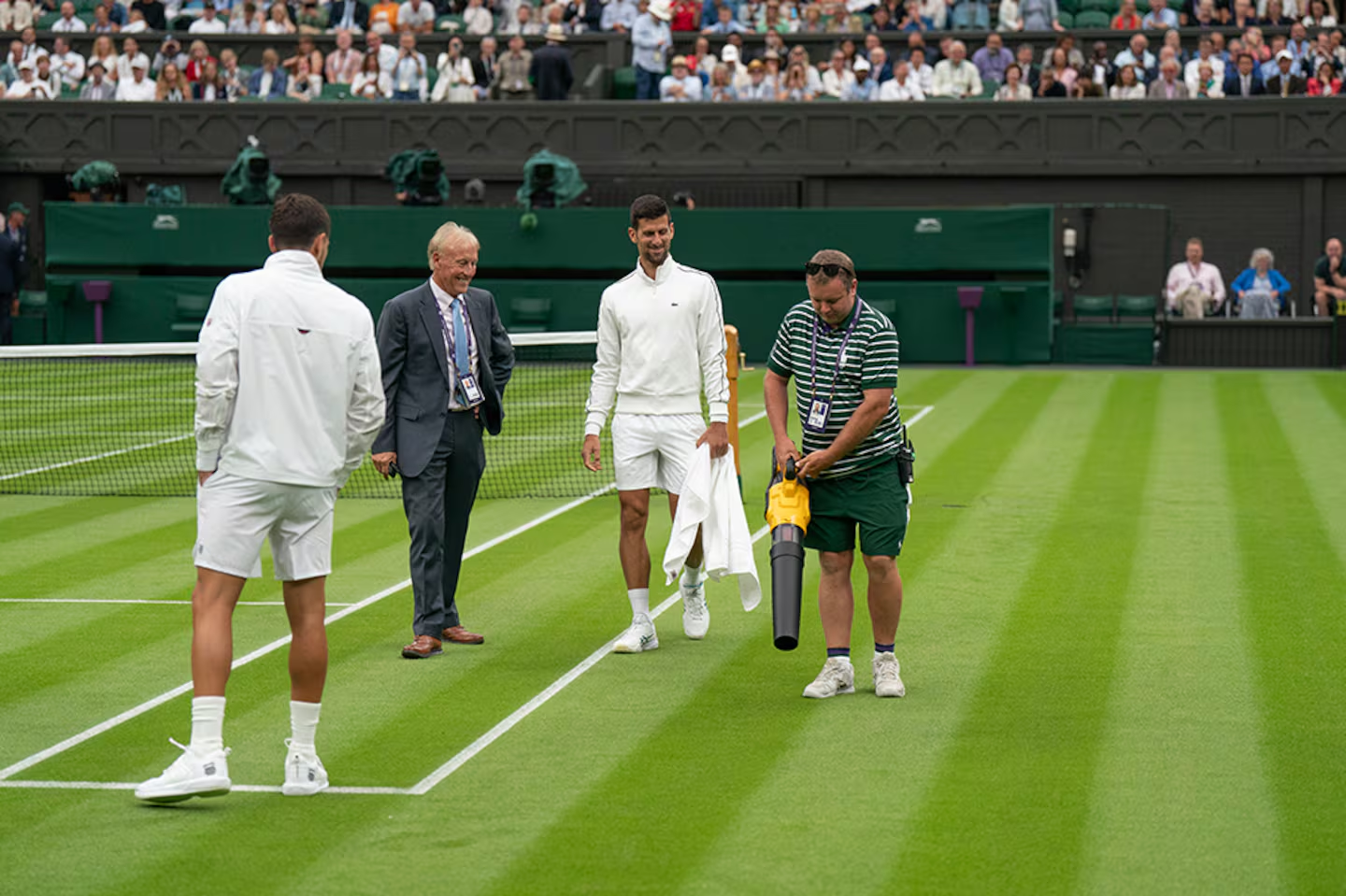
Most fans see the green first, then the tennis. The hidden story is that Grass Court Maintenance at Wimbledon shapes the bounce, the footing, the shot choices, and even the nerve level before a player walks onto Centre Court. For U.S. viewers raised on the harder rhythm of the U.S. Open, that can feel odd. A tennis court should be a stage, not an actor. Yet the lawn at the All England Club acts every day. It dries, bruises, grips, skids, and changes under pressure. That is why serious sports storytelling and digital visibility around Wimbledon often starts beneath the shoes, not above the net. Wimbledon’s own official grass court guide points to the small details: close mowing, daily marking, careful water control, and a long build before the first serve. Players may talk about movement or timing. They rarely say the whole truth: the court is not passive. It is part opponent, part partner, and part weather report.
Why grass court maintenance at Wimbledon starts with restraint
The smartest work on Wimbledon grass courts is not flashy. It is quiet control. The grounds crew is not trying to make the lawn look like a golf postcard. They are trying to hold a living surface inside a narrow playing window while the world’s strongest tennis players grind holes into the same few patches of earth. That takes more restraint than many fans expect. A crew can overwater, overfeed, overroll, or overcorrect a court into trouble. The best decision may be the one no spectator notices. That is a hard idea for fans because sport usually sells action. Here, control often means resisting action until the court asks for it.
Why the 8mm cut matters more than the color
The famous short cut is easy to reduce to trivia. Eight millimeters sounds like a neat number for a broadcast graphic. In practice, that height is a bargain between speed, plant health, and player trust. Cut it too low, and the plant has less leaf to recover. Leave it too long, and the ball sits up, the shoe grabs differently, and the court loses the bite that makes grass feel like grass.
American fans who spend most of the year watching hard courts may think surface speed comes from the ball skidding on slick blades. That is only part of it. The soil underneath matters as much as the leaf. A ball meeting a firm base reacts in a different way than a ball meeting a softer, damp one. The blade is the visible layer. The base is the truth.
This is why tennis court grass care looks almost fussy from the outside. Mowing each day during the event is not about vanity. It is about repeatability. Players hate surprise underfoot more than they hate speed. A fast court can be solved with timing. A court that changes without warning gets inside the head. The quiet win for the crew is not a perfect photo. It is a player who never thinks about the surface during a full-speed chase.
How daily marking becomes part of the playing surface
The white lines look like paint on top of the story, but they become part of the story. On a grass court, a player does not move on one surface. They move across turf, worn soil, paint, old footmarks, and moisture zones. A wide step into the doubles alley can feel different from a recovery step behind the baseline. That is why line marking belongs in the same conversation as mowing.
That matters most when players defend. Watch a returner on break point. The first split step lands near the same zone again and again. Over two weeks, those zones turn from clean green into pale, dusty, bruised earth. The public sees wear. The player feels evidence. A small slip on a neutral point may vanish from memory. A slip at 4-4 in the fifth set becomes part of a player’s private scouting report.
The counterintuitive part is that the court cannot be frozen in day-one condition, and it should not be. The All England Club grounds team aims for fairness, not museum glass. Some wear is honest. The job is to keep the wear predictable enough that a player can commit to a sprint without bargaining with fear. In that sense, daily marking is not decoration. It is one more act of keeping the court readable. That readability is why two players with opposite styles can still feel the same basic promise from the ground.
The grass variety changed the tennis without shouting about it
Wimbledon’s shift toward 100% perennial ryegrass changed more than the lawn’s survival rate. It helped reshape the style of play. No single plant ended serve-and-volley dominance, but the surface stopped rewarding one narrow style as strongly as it once did. Equipment, strings, fitness, and training all played their parts. The grass still did its quiet work. The change also shows how a conservative tournament can alter the sport without sounding loud about it. A seed choice can become a tactical choice once the best players in the world start testing it. The plant does not hit a forehand, but it can decide whether a forehand sits high enough to attack.
Why perennial ryegrass favors durability and truer bounce
Perennial ryegrass stands more upright than older mixed swards and can take punishment better. That sounds like a groundskeeper’s concern, but it lands directly in the match. A tougher plant helps the court hold together longer near baselines, where modern rallies do the most damage. When the surface holds, the bounce becomes less wild.
This does not mean Wimbledon grass courts turned into hard courts with a green coat. They still reward first-strike tennis, low balance, short backswings, and nerve at the net. The difference is that baseline players now get more fair chances to reset a rally. You can see it when a defender slides a slice low, survives the next ball, then turns the point two shots later.
For a useful companion read, a site owner could place this article beside a guide to tennis court surfaces. The searcher who asks why Wimbledon plays differently often needs the clay and hard-court contrast before the grass lesson clicks. The hidden SEO angle is strong too: people search for court speed, but what they often need is a plain explanation of plant behavior, bounce, and movement in one place.
Why slower-looking grass can still feel fast to players
Here is the part many casual arguments miss: a court can produce longer rallies and still feel quick. The ball may bounce truer than it did in past eras, yet the player still has less time because the bounce stays low and the footing punishes lazy setup. Television stretches time. Court level shortens it.
A U.S. club player who tries grass for the first time often notices the same thing. The shot that works on a public hard court arrives late on grass. The foot that would plant cleanly on acrylic needs a softer landing. The racket preparation must start earlier. The ball is not always racing past you. Sometimes your body is late before your eyes know it.
That is why players rarely complain in plain language. Saying “the court is slow” or “the court is fast” is too crude. The real question is where the speed lives. It may live in the bounce, in the shoe grip, in the first step, or in the split second when the ball stays below the strike zone. A player can win on the stats sheet and still feel rushed all afternoon.
Water, soil, and weather make the court a daily negotiation
The romance of Wimbledon makes the place feel timeless, but the lawn is a daily negotiation with London weather. Sun, cloud, humidity, wind, and roof use can all push the surface in a new direction. The grounds crew works with readings and experience, yet no reading removes judgment. Living turf always keeps a vote. That is what separates Wimbledon from a fixed acrylic court in New York or Indian Wells. The same court can ask a different question after lunch. That question may be small: a lower skid, a slower recovery step, a nervous plant before a wide serve. At this level, small is plenty. The crew may make a choice in the morning that no fan can see, yet a player may feel it on the first return game.
Why less water can sometimes mean safer tennis
Most people connect water with healthy grass, so they assume more water means a better court. On tournament grass, that instinct can fail. Too much water softens the upper layer, changes bounce, and can make movement feel less secure. Too little water stresses the plant and invites brittle wear. The target is not “wet” or “dry.” The target is match-ready.
That balance explains why tennis court grass care is more like managing a kitchen than watering a lawn. A backyard owner in Ohio can soak a thirsty patch and wait for recovery. Wimbledon does not have that luxury at 1:30 p.m. on the second Monday. The surface has to perform when the draw says so. It must also recover overnight without waking up spongy.
The non-obvious lesson is that player safety can call for restraint. A lush lawn is not always a safer lawn. Pretty grass can hide a soft top. A slightly firmer, less showy surface may give a player cleaner feedback through the shoe. That feedback matters because elite movement is not gentle. One poor push can turn a point into a medical timeout.
How the baselines reveal the modern game
The baselines tell the truth before the scoreboard does. By the middle of the event, the clean green behind each baseline turns into a map of modern tennis. Big servers land in similar places. Returners hammer the same recovery steps. Baseliners trade force from positions that would have shocked older grass specialists.
That wear pattern is not a failure of care. It is a record of power. When the All England Club grounds team checks hardness and wear, it is reading the body language of the tournament. A long men’s match on Court 18, a heavy women’s baseline duel, or a doubles day with repeated net charges can all leave different scars. The marks are not random. They show where tactics met biology.
American readers may find the best comparison at a baseball infield. The dirt around first base does not stay clean because the game asks too much of it. The skill is not pretending no one ran there. The skill is keeping the surface fair after everyone does. Wimbledon’s baselines work the same way. The court is maintained for competition, not untouched beauty.
What players feel but rarely explain to fans
Players do discuss grass in press rooms, but they often speak in shorthand. “It was slippery.” “The bounce was low.” “I needed time.” Those lines sound simple because athletes protect their focus. Behind those phrases sits a private checklist of balance, trust, timing, and risk. The public wants one clean answer. The player feels a dozen small signals through the soles of the shoes. A champion may not name all of them, but the body keeps count.
Why footwork is the hidden Wimbledon skill
Grass rewards the player who moves with humility. Hard-court movement often lets you stop hard and push back with force. Clay lets you slide with a long, visible finish. Grass asks for smaller steps, lower hips, and a careful first push. The best movers look calm because they never ask the surface for more than it can give.
That is why a great grass player can seem less dramatic than a great clay player. The work is tucked inside the feet. A half step before contact, a quieter plant, a shorter recovery route: these are not highlight clips, but they decide points. A coach watching from the side may care less about the winner and more about whether the player trusted the third step.
A natural internal partner here would be player movement on grass courts, because the surface story and the body story belong together. You cannot understand one without the other. The viewer who learns to watch the feet starts seeing Wimbledon earlier in the point, before the racket makes the result obvious. That is especially useful for U.S. fans who hear grass described as a novelty each summer. The surface is not a costume for tradition. It is a movement test with its own grammar.
Why court talk stays guarded during the tournament
Players avoid saying too much because court comments can sound like excuses. Tennis culture rewards control. If you blame the surface, even fairly, fans may hear weakness. So players code their complaints. They talk about timing, rhythm, or “finding the feet.” Those words carry more meaning than they appear to carry.
There is another reason for silence. Wimbledon grass courts change from week one to week two, and smart players adapt faster than they explain. A public complaint gives rivals a clue. A private adjustment wins a set. On grass, the line between information and confession can be thin. A player who admits the wide forehand corner feels insecure may invite pressure there by the next round. Tennis players scout patterns with a cold eye. A public phrase can become a private plan on the other side of the net.
The final hidden point is almost unfair: the best players do not need perfect grass. They need readable grass. Once the surface speaks the same language from point to point, champions can solve the rest. That may be the real maintenance secret players keep quiet. They are not chasing beauty. They are chasing trust.
Conclusion
Wimbledon’s lawn is famous because it looks calm while asking hard questions. It asks the grounds crew to balance plant health with elite force. It asks players to trust a living surface under career-defining pressure. It asks fans, including those watching from the United States, to notice more than the green picture on screen.
The deeper lesson is that grass court maintenance is not a backstage chore at Wimbledon. It is part of the sport’s competitive design. The mowing height, ryegrass choice, water control, soil firmness, and daily repairs shape how courage looks in real time. A player who attacks the net is partly reading the turf. A baseliner who survives a low skid is doing the same.
So the next time Centre Court shows those worn brown marks near the baseline, do not see damage alone. See a living record of choices, stress, and skill. Watch the shoes. Watch the bounce. Watch the small pause before a player pushes wide. In that pause, you can see how much work happened before the gates opened. The grass has been speaking all match, and the best viewers learn to listen before the winner lands.
Frequently Asked Questions
How does Wimbledon keep its grass courts so short?
Daily mowing during the tournament keeps the surface at its playing height. The crew also marks the lines each day and manages water with care. Short grass helps the ball stay low, but the soil firmness underneath has equal influence on play.
Why does Wimbledon use perennial ryegrass?
Perennial ryegrass handles wear better than older grass blends and gives a more reliable bounce. That matters because modern players hit harder, move faster, and grind the baselines more. The plant choice helps the courts survive two weeks of heavy match stress.
Are Wimbledon grass courts faster than U.S. hard courts?
They can feel faster in certain moments because the ball often stays lower and skids through. Hard courts may produce a higher, more regular bounce. Grass speed is tied to footing, soil firmness, moisture, and the player’s ability to prepare early.
Why do Wimbledon baselines turn brown during the tournament?
Players land, recover, and push from the same baseline zones hundreds of times. The grass thins there first because modern tennis places so much force behind the court. Brown patches are expected. The goal is fair, safe wear, not untouched color.
Does rain make Wimbledon grass dangerous?
Rain can make grass slick and change the way shoes grip. That is why play may stop when the surface cannot offer safe movement. A closed roof helps scheduling, but moisture control still matters because indoor conditions can affect how the court feels.
Can a home lawn be maintained like Wimbledon?
A home lawn can copy a few ideas, such as sharp mowing, steady feeding, and careful watering. It cannot copy the whole system without sport-grade soil work, mowing gear, and daily attention. Wimbledon is a playing surface, not a normal yard.
Why do players talk less about grass conditions publicly?
Court comments can sound like excuses, so players often keep their views coded. They may mention footing, rhythm, or timing instead. Behind those words, they are judging bounce, grip, worn areas, and whether they can trust hard movement.
What should fans watch to understand Wimbledon grass better?
Watch the first step after a serve return, the height of the bounce near the baseline, and how players recover after wide balls. Also watch the worn zones late in the event. Those marks show where the tournament’s real pressure has lived.