

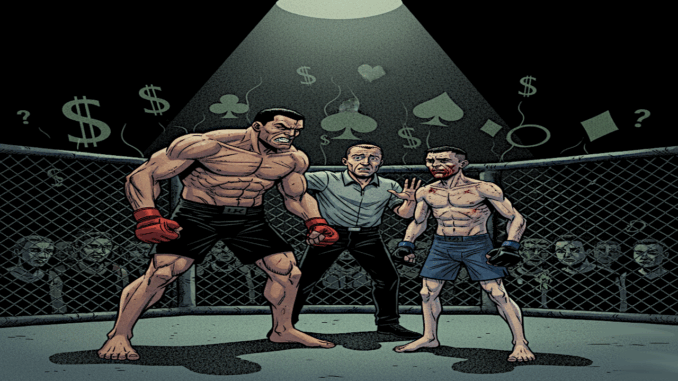
The scale looks fair because it gives everyone the same number to hit. That is the comfort of it. The problem is that the Weight Class System often measures one thin moment on Friday, not the body that walks into the cage on Saturday night. A fighter can weigh 155 pounds at the official check, then enter the bout looking closer to a welterweight. Fans who follow combat sports media analysis have seen this pattern enough to know the number alone does not tell the story. For American MMA fans, the unfairness is not hard to spot. One athlete may look drained, flat, and slow. The other looks full, calm, and built for control. That gap shapes wrestling exchanges, clinch strength, punch resistance, and late-round pace. The sport needs divisions. Nobody wants open-weight chaos. But the current setup still leaves space for gamesmanship, and fighters who manage the scale better can gain more than a fair contest should allow.
Where the Weight Class System Creates the First Unfair Edge
Most fans think unfairness starts when the bigger fighter rehydrates. It starts earlier. It starts when two athletes with different frames, bone structure, walk-around habits, and recovery skill are asked to meet at one number as if that makes them equal. The official Association of Boxing Commissions Unified Rules list division limits, but limits are only the outer fence. Inside that fence, fighters can be built in ways that barely resemble each other.
Why one weigh-in cannot measure fight-night size
A weigh-in captures compliance. It does not capture readiness. That distinction matters because MMA is not a sprint where athletes return to normal hydration in a simple, harmless way. Some bodies rebound well after a hard cut. Others do not. Two fighters can make lightweight, yet one returns with shoulders full, legs alive, and grip strength back. The other comes in with heavy feet and a dull reaction time.
That gap is where MMA weight cutting turns from discipline into quiet advantage. The public sees the athlete step on the scale and make the limit. The coach sees the next part: fluids, salt, carbs, sleep, bowel comfort, and the nervous system trying to wake back up. A fighter who has that process mapped can carry a hidden edge into the cage.
Think about a UFC lightweight bout where both athletes weigh 155 at the official check. By fight night, one looks like a natural 155-pounder. The other looks like a welterweight who borrowed the division for a day. That is not illegal. It is also not the same kind of fairness the division name promises.
The scale rewards recovery, not only discipline
The common story says the hardest worker wins the cut. That sounds clean. It is not always true. Sometimes the fighter with the better nutrition team, better hotel setup, calmer travel week, and fewer media duties gets the better body back.
A young regional fighter in Texas may cut in a budget hotel with limited help. A ranked UFC fighter in Las Vegas may have a full team watching every sip and meal after weigh-ins. Both are playing by the rules. They are not playing the same recovery game.
This creates a fighter size advantage that is hard for fans to measure but easy to feel during exchanges. The bigger athlete can lean in the clinch without spending as much energy. They can force scrambles that wear the smaller fighter out. Even when the smaller fighter has cleaner technique, every defensive move costs more.
Weight Cutting Turns Divisions Into Strategy Battles
Once fighters learn that the scale can be managed, the division stops being a natural home and becomes a tactical choice. That is where the sport gets messy. The question changes from “Where do I belong?” to “Where can I be biggest without breaking?” The answer can shape a career, a title path, and a fighter’s long-term health.
Why dangerous cuts can still look professional
A bad cut does not always look dramatic on stage. Some fighters smile, flex, and pose after a brutal week. That performance hides the risk. They know looking weak can affect betting lines, opponent confidence, and public pressure.
MMA weight cutting also carries a strange badge of toughness. Fighters talk about suffering as if it proves commitment. In some gyms, moving up is framed as quitting the hard road. That culture can push athletes to chase smaller divisions long after their bodies have moved on.
The non-obvious part is that a harsh cut can help and hurt in the same bout. A fighter may win the first round because they are bigger and stronger. Then the bill arrives. Their gas tank fades. Their chin looks less steady. Their decision-making gets rough. Fans call it poor cardio, but the problem may have started before the walkout song.
How five pounds can change the whole fight
Five pounds sounds small to a casual viewer. In a cage, it can be the difference between clearing an underhook and getting pinned. It can decide whether a takedown attempt stalls or finishes. It can decide whether a fighter absorbs a body kick or folds around it.
The gap between bantamweight and featherweight is not only ten pounds on paper. It is reach, shoulder width, neck strength, and how much force the body can carry while tired. When fighters squeeze into the lower class, that margin can become more than a number.
This is why fighter safety in combat sports belongs in the same conversation as matchmaking. An unfair matchup is not always a mismatch in skill. Sometimes it is a mismatch in how much body one athlete can bring back after the scale has done its job.
Missing Divisions Create Pressure at the Edges
The current division map looks orderly until you notice the spaces between the lines. Some jumps are manageable. Others punish athletes who sit between homes. That problem is clear around 155, 170, and 185 pounds, where a fighter can be too large for one class yet too small for the next.
The 155-to-170 gap creates career traps
Lightweight to welterweight is one of the most discussed jumps in American MMA because the gap is wide and the talent pool is deep. A fighter who struggles to make 155 may not suddenly become a strong 170-pounder. They may lose the size edge they once had while keeping the wear from years of hard cuts.
That is the cruel part. Moving up can be healthier and still less competitive. Staying down can be dangerous and still more rewarding. The incentive structure points fighters toward risk.
A 165-pound division has been debated for years because it would catch athletes stuck between lightweight and welterweight. The counterargument is that more divisions can water down titles. That concern has weight. Yet the sport already accepts catchweight fights when problems happen late. Planned structure would be cleaner than emergency bargaining.
Catchweight fights expose what divisions hide
Catchweight fights are often treated like odd exceptions, but they reveal the truth. The sport already knows the fixed limits do not fit every body or every situation. When an athlete misses weight, the bout may continue at a new number, often with a purse penalty and a choice for the opponent.
That choice is not as free as it sounds. A fighter may accept because they trained for months, paid a team, booked family travel, and needs the paycheck. Saying no can be smart. It can also feel like losing an opportunity before the cage door closes.
The strange insight is that catchweight fights can be more honest than standard bouts. At least the actual mismatch is named. In a normal fight, a huge rehydration gap can exist without any label. The announcer still says both athletes made weight, and the audience is left to explain the size difference with their eyes.
Better Rules Would Protect Skill, Not Punish Size
The goal should not be to shame large fighters. Size is part of combat sports. Reach, frame, and strength all matter, and nobody expects perfect equality. The better goal is to stop rewarding the most extreme scale manipulation more than actual fighting skill.
Rehydration checks could change the incentives
Some commissions and promotions have tested different ideas across combat sports, from extra medical checks to limits on how much weight an athlete can gain back. None of these tools is perfect. Fighters can game almost anything if the reward is big enough.
Still, rehydration checks would move the sport in a better direction. They would tell fighters that the contest is not only about making a number once. It is about arriving fit to compete. That small shift could reduce the fighter size advantage without forcing every athlete into a new division overnight.
The challenge is enforcement. A strict limit can cancel fights late, which hurts cards, fighters, and fans. A soft limit can become theater. The best version would combine medical review, repeat-offender penalties, and transparent data, so the rule targets patterns instead of one awkward week.
Matchmaking should account for frame, not only rankings
Rankings make matchups easy to sell. They do not always make them fair. A shorter wrestler with compact strength may match well against a tall striker at the same weight. A long grappler with a huge back and heavy clinch game may create a different kind of problem for someone who gives up frame and recovery.
That does not mean promoters should protect fighters from hard opponents. It means the sport should be honest about what “same division” does not solve. Style, age, damage history, and body type all sit inside the matchup. The scale is only one piece.
This is where MMA matchup analysis can teach fans to watch better. Do not look only at reach and records. Look at who controls space after contact. Look at who can stand up after being flattened once. Look at whose shoulders and hips still carry force in round three. Fairness lives in those details.
Conclusion
MMA does not need to abandon divisions. It needs to stop pretending the scale settles every question of fairness. The best fights happen when skill decides the night, not when one athlete wins the hidden contest of shrinking and rebuilding a body. The Weight Class System still gives the sport order, but order is not the same as balance. Better policy would not remove size from fighting. It would keep size from becoming a backstage trick that overwhelms timing, courage, and craft. More honest use of catchweight fights, smarter medical checks, and closer attention to rehydration patterns would protect fighters without draining the sport’s edge. Fans should ask sharper questions too. When someone looks huge on fight night, do not stop at “they made weight.” Ask what the system rewarded before the first punch landed.
Frequently Asked Questions
Why do MMA fighters cut so much weight before a fight?
They cut weight to enter a lower division, then regain size before the bout. The goal is to be bigger than the opponent on fight night. It can help with strength and control, but it can also damage stamina, focus, and durability.
Are MMA weight classes fair for every fighter?
No system fits every body. Some fighters sit between divisions, so one class demands a harsh cut while the next makes them undersized. The rules create order, but they cannot erase frame, reach, recovery, or natural body size.
What is the biggest flaw in MMA weight cutting?
The biggest flaw is that the official number is checked before the fight, not during it. A fighter may make weight, then regain enough size to create a hidden advantage by the time the cage door closes.
Do catchweight fights make MMA less fair?
They can, but they also make the problem visible. A late catchweight bout may pressure the smaller fighter to accept bad terms. Still, it is more honest than pretending two athletes are equal because both once touched the same limit.
Why do fighters not move up a division sooner?
Moving up can remove the strain of cutting, but it may also erase a size edge. A fighter can become healthier and less competitive at the same time. That career risk keeps many athletes in tough cuts longer than fans expect.
Could more MMA divisions solve unfair matchups?
More divisions could help athletes stuck between current limits, especially near lightweight and welterweight. The risk is title clutter. The better answer may be a mix of added classes, stricter medical review, and better rehydration tracking.
How does size advantage affect grappling in MMA?
Extra size matters most after contact. A larger fighter can lean harder, finish takedowns with less effort, and make stand-ups more tiring. Even skilled defense becomes costly when the opponent brings more mass into every clinch exchange.
What should fans watch besides the weigh-in number?
Watch the face, posture, pace, and strength after the first round. A fighter who looked fine on the scale may look flat once forced to scramble. Fight-night movement often tells more about the cut than the weigh-in pose.