

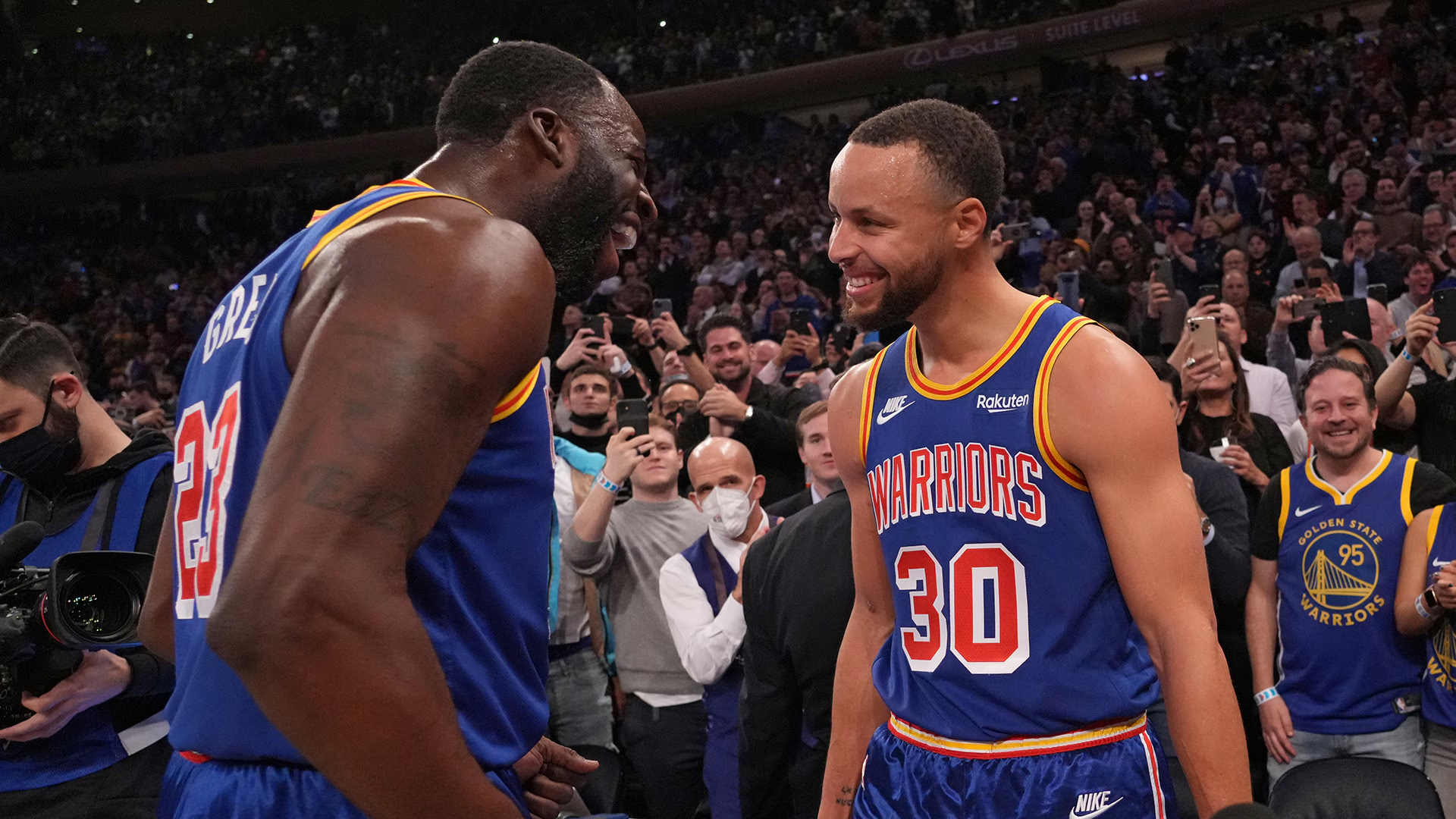
A defender used to feel safe once a ball handler crossed half court and slowed down near the logo. That comfort is gone now, and Stephen Curry is the main reason. His Stephen Curry three point range forced NBA Defense to stretch far beyond its old shape, turning the space between the arc and midcourt into live scoring territory instead of dead air. For American fans who grew up watching guards call a set before the three-point line, Curry’s rise felt strange at first. Then it became normal. Then every youth gym copied it. The change was not only about shooting deeper. It was about making defenders panic earlier, communicate faster, and guard players in places coaches once ignored. That shift matters for anyone studying modern basketball, from high school coaches to fans reading American sports media analysis to understand why today’s court feels wider than the one they watched ten years ago. Curry did not remove defense from basketball. He made it work harder before the real action even started.
How One Shooter Stretched the Court Before the Play Began
Curry’s range did something odd to defenders: it made them nervous before he attacked. A normal great shooter bends coverage near the arc. Curry pulled the first line of pressure toward half court, which meant the rest of the defense had to shift sooner than planned. That early shift sounds small until you watch a big man step out two feet too high, a wing hug the strong side, and a cutter slip behind everyone.
Why the Logo Became a Real Defensive Landmark
For decades, the logo was a reset zone. Guards dribbled there to call plays, point at teammates, or wait for a screen. Defenders could sag, breathe, and keep the ball in front. Curry changed that bargain because his three-point shooting was accurate enough from deep areas to make a soft stance feel reckless.
The counterintuitive part is that the shot itself was not always the whole problem. Even when Curry did not shoot, defenders had to honor the possibility. That meant higher pick-up points, rushed body angles, and earlier help. A defense that starts working at 35 feet has less energy and less spacing discipline by the time the ball reaches 24 feet.
You can see this in the way teams guarded Golden State during Curry’s prime title years. Bigs who were trained to sit back in drop coverage suddenly had to meet the ball higher. Guards who were used to sliding under screens had to fight over them. One missed step could turn into a clean look, a four-on-three for Draymond Green, or a backdoor cut from Klay Thompson.
Why “Gravity” Became More Than a Broadcast Word
Curry’s gravity was not magic. It was a chain reaction. The first defender chased him higher. The screener’s defender climbed higher too. The weak-side defender took one step toward the ball. Now a corner shooter had room, a cutter had space, and the rim protector had to choose between two bad answers.
That is why Stephen Curry range became a coaching problem, not only a highlight package. The question was no longer, “Can he make that?” It became, “What do we give up if we guard him as if he can?” For many teams, the answer was painful. Give him room and he shoots. Send two bodies and the Warriors play through open space.
A common mistake is thinking Curry’s deepest shots were valuable only when they went in. Some of their value came from the fear they planted. A 30-footer early in the first quarter could change how a defense handled every screen for the next 40 minutes. That is rare power for one shot type.
Stephen Curry Three Point Range and the New Rules of NBA Defense
Stephen Curry Three Point Range forced coaches to rethink where danger starts. Before him, many teams treated the arc as the main border. After him, the border moved back. The defense had to pick him up earlier, switch with cleaner timing, and accept that a “good” contest from normal distance might already be late.
How Pick-and-Roll Coverage Had to Move Up the Floor
The pick-and-roll used to give defenses a few standard choices. Drop the big. Go under the screen. Show briefly and recover. Curry made those answers feel old because his pull-up shooting punished space faster than most defenses could close it.
Against him, a big who dropped too low was not protecting the paint. He was donating a clean three. A guard who went under a screen was not saving energy. He was inviting one of the most efficient shooters ever to step into rhythm. That changed pick-and-roll coverage across the league because younger guards began copying the same pressure points.
The real lesson was not that every player should shoot from 30 feet. Many cannot. The lesson was that deep shooting changes the math only when the defense believes it. Curry earned that belief through volume, speed, and balance. He could shoot after a hard dribble, off a relocation, or with his shoulders still turning. That made the coverage problem feel endless.
Why Switching Became a Survival Tool
Switching grew because it cut down the tiny windows Curry lived on. If a defender trailed by half a step, he could fire. If a big sat back, he could walk into space. Switching kept a body attached and reduced the delay between screen and contest.
Yet switching brought its own cost. A center on Curry near the logo is not safe. A small guard switched onto a rolling big is not safe either. Golden State built entire possessions around making defenses solve that trade. The Warriors did not need a dramatic play call. A simple screen could force a mismatch, pull a big away from the rim, and open the lane.
This is where the change spread beyond Curry. Teams across the USA, from NBA arenas to college gyms, started valuing defenders who could survive in space. Big men had to slide. Wings had to guard up and down. Guards had to fight through off-ball screens and still recover to the ball. The court had not changed size. Curry made it feel bigger.
Why Curry’s Range Changed Off-Ball Defense Too
The biggest mistake in Curry analysis is treating him as a normal high-usage shooter. He did plenty with the ball, but his off-ball movement hurt teams in a different way. A defender could guard the initial action well, relax for one second, and lose him on a cut to the corner. The shot came before the mistake even looked like a mistake.
Why Defenders Could Not Rest After Giving Up the Ball
Most stars become less dangerous after they pass. Curry often became more dangerous. Once he gave the ball up, he moved through screens, circled behind the play, or drifted into empty space. His defender had to chase through traffic while also watching the ball. That is exhausting.
This changed off-ball defense because teams could not load up on the ball the same way. A helper who stared at Draymond Green for half a second could lose Curry behind a screen. A wing who tagged a roller too long could give up a corner three. The normal help rules still existed, but they had to be sharper and shorter.
A concrete example is the Warriors’ split action from the high post. Green catches near the elbow. Curry cuts around a teammate. The defender must choose: trail tight, jump the passing lane, or switch. Every answer has a trap. Trail too slowly and Curry gets space. Switch lazily and he slips into a pocket. Overplay and he cuts behind you.
How Youth Basketball Copied the Shot but Missed the Movement
Across American gyms, kids copied the deep pull-up first. That part was visible. What many missed was the footwork, conditioning, and movement that made the range useful. Curry’s long-distance shooting was tied to constant motion, fast balance, and instant release. It was not a random green light.
This matters because three-point shooting changed how young defenders are trained too. Coaches now teach earlier ball pressure, cleaner screen talk, and longer closeouts. They also have to teach patience. Young defenders often fly at shooters from too far away, which opens drives and fouls. Curry forced the sport to value distance control, not blind hustle.
The non-obvious lesson is that his range made defense more skilled, not less meaningful. Lazy defense gets exposed faster now. But smart defense has more chances to show craft. Angles, timing, hand placement, and screen navigation matter more when one false step gives a shooter daylight.
The Permanent Change Was Mental Before It Was Tactical
Curry’s deepest impact came from changing what defenders fear. Before him, a 28-footer early in the clock felt like a shot you hoped the offense would take. After him, that same area became a danger zone. Once fear moves, tactics follow. Coaches can draw new coverages, but players must first believe the threat is real.
How Curry Changed Shot Quality Without Needing Permission
Old basketball language treated deep threes as bad shots unless the clock was dying. Curry broke that habit because he made them within rhythm. A shot from several feet behind the arc could be clean, balanced, and tied to the offense. That forced analysts, coaches, and defenders to separate distance from quality.
The official NBA player tracking and shot data helps show why shot location matters, but Curry added a human layer to the numbers. A shot chart can tell you where the ball came from. It cannot fully show the fear of the defender who knows the release is coming before his feet are ready.
That fear changed scouting reports. Teams started marking pickup points farther from the basket. They talked about top-locking, face-guarding, and sending help higher. They also accepted tradeoffs that would have sounded strange in earlier eras, such as trapping far from the arc and letting someone else make the next pass.
Why the Copycats Prove the Change Lasted
The league did not become full of Curry clones. That is the point. The change lasted because it moved the standard, not because everyone matched him. Damian Lillard, Trae Young, Luka Dončić, and other deep-range creators made defenses respect longer shots in their own ways. Curry opened the door, but each player added a different stress.
Teams also changed roster building. A guard who could not shoot off the dribble became easier to scheme against. A big who could not step up became harder to keep on the floor late in playoff games. Wings with length and quick feet gained value because they could switch, chase, and still contest.
For fans, the result is a faster mental game. Watch a modern possession and notice how early the defense starts negotiating. One defender points. Another shades high. A big inches away from the rim. None of that happens by accident. It is the long shadow of Curry’s range.
Conclusion
The lasting lesson from Curry’s rise is not that every team should fire from the parking lot. That would flatten the story and miss the work behind it. His range mattered because it was attached to footwork, nerve, conditioning, and a system that punished every overreaction. Stephen Curry three point range changed NBA Defense by moving pressure higher, widening help responsibilities, and making hesitation expensive. The deeper truth is that he did not make defense disappear. He made ordinary defensive habits look outdated. That is why his influence still shows up in scouting reports, youth practices, playoff rotations, and the way fans judge shot quality. Basketball keeps adjusting, but the old comfort zone is gone. If you want to understand the modern game, start watching where defenders pick up the ball, not where the shot finally leaves the hand. For more connected basketball strategy ideas, see modern basketball spacing concepts and how elite shooters change team offense.
Frequently Asked Questions
How did Stephen Curry change the way defenders guard the three-point line?
He forced defenders to pick him up farther from the basket and fight over screens with less room for error. The three-point line stopped being the main warning zone. His threat started several steps behind it, which pulled coverage higher and opened space behind the defense.
Why is Curry’s shooting range harder to defend than normal deep shooting?
His range comes with speed, balance, and movement. Many players can make a deep shot in practice, but Curry can do it off the dribble, after a screen, or while relocating. Defenders cannot wait to see the shot. They must react before he gathers.
Did Curry’s deep shooting hurt traditional basketball?
It changed traditional basketball, but it did not ruin it. Post play, cuts, screens, and passing still matter. Curry’s rise made spacing more valuable and punished slow defensive habits. The sport became less forgiving, which can feel harsh to fans who prefer older styles.
What defensive coverage works best against Stephen Curry?
No single coverage solves him. Switching can reduce clean looks, trapping can force the ball away, and top-locking can deny catches. Each choice gives up something else. The best defenses mix coverages, communicate early, and avoid giving him the same read every trip.
Why do teams trap Curry so far from the basket?
They trap him high because waiting can be worse. If a big drops back, Curry may shoot before the contest arrives. A high trap forces the ball out of his hands, but it also creates open space for teammates. That tradeoff defines the problem he creates.
Can young players copy Curry’s long-range shooting style?
They can study it, but copying the shot alone is risky. Curry’s range is built on years of strength, footwork, touch, and conditioning. Young players should first master balance, shot selection, and normal-distance accuracy before treating deep threes as a regular weapon.
How did Curry affect defensive big men in the NBA?
He made mobility harder to ignore. Big men had to step higher, switch more often, and guard in space without fouling. Rim protection still matters, but a center who cannot handle action near the arc becomes easier to attack in late-game matchups.
Why does Curry’s off-ball movement matter as much as his shooting?
It keeps pressure on the defense after he passes. Many stars rest or watch after giving up the ball. Curry cuts, screens, and relocates into open windows. That movement forces defenders to track him and the ball at the same time, which creates mistakes.