

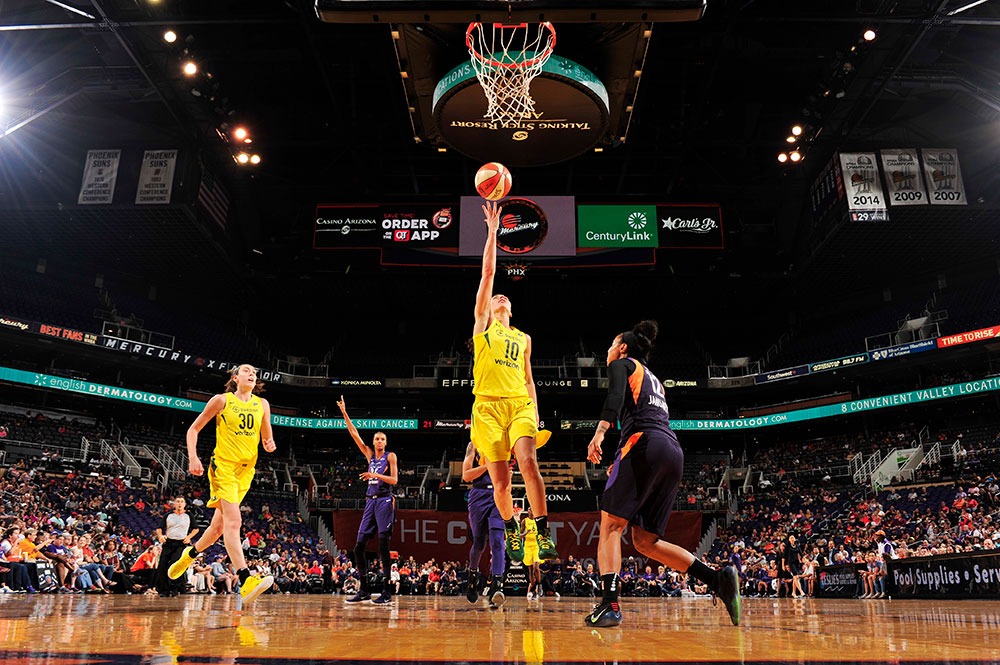
The empty highlight reel says more than the box score. The Sports Media Coverage gap is not a mystery created by weak fan interest, thin talent, or some cold business law. It is a habit that outlived its excuses. American fans have already shown up for women’s basketball, soccer, volleyball, hockey, softball, gymnastics, and track when the games get real promotion and clean access. Nielsen’s women’s sports viewership research reported that U.S. audiences consumed 46 billion minutes of women’s sports in 2025, which makes the old “nobody watches” line look tired. Still, too many shows treat those fans like a pleasant accident. If you work around sports, media, or public relations strategy, you can see the same pattern: attention follows investment, then leaders pretend the attention appeared from nowhere. The gap stays wide because decision-makers confuse old routines with audience truth. That mistake costs female athletes money, costs fans context, and costs young girls the simple thrill of seeing excellence treated as normal.
Why Sports Media Coverage Still Trails the Audience
The strongest proof against the old excuse comes from the audience itself. Women’s sports no longer need a once-every-four-years rescue from the Olympics to show value. The demand appears across college arenas, pro broadcasts, streaming apps, and short-form clips. The tension sits in the middle, where editors, schedulers, advertisers, and rights buyers still act as if women’s events must earn oxygen one miracle at a time. That middle layer is where the damage happens. Fans can want the games, athletes can deliver the drama, and leagues can stage the product well, yet the public conversation still shrinks if the media machine treats every success as a surprise instead of a schedule.
The audience arrived before the habit changed
The 2024 Iowa versus South Carolina women’s national title game drew 18.9 million viewers, becoming ESPN platforms’ most-watched college basketball game on record, men’s or women’s. That game did not win because the country suddenly discovered women could play. It won because the story had been allowed to breathe for months. Fans knew the players, the stakes, the coaches, the pressure, and the history.
That is the missing piece in most weeks. Men’s sports get constant small reminders. Injury updates. Practice notes. Trade rumors. Locker room quotes. Rookie debates. Power rankings. Those crumbs build hunger before the meal. Women’s sports often get the meal dropped cold on the table, then get blamed when casual fans do not know every ingredient.
The counterintuitive truth is that giant events can hide the daily problem. A record title game looks like a fix from far away. Up close, it often proves the opposite. When the same audience vanishes from weekday panels and highlight blocks, the issue is not demand. It is distribution.
A fan cannot form a habit around a sport that appears like a pop-up shop. The audience needs repetition, not charity. A Wednesday preview tells a viewer what to care about on Friday. A Sunday recap tells that same viewer what changed. Over time, those plain acts turn strangers into regulars.
The old newsroom clock still favors men’s leagues
Sports desks still run on a clock built around football, men’s basketball, baseball, and the loudest pro leagues. That clock decides which games feel urgent before anyone checks the numbers. A routine NFL injury note can outrank a packed WNBA arena because the workflow already has a slot for one and not the other.
The WNBA’s 2024 season showed how far that old clock lags. The league reported more than 54 million unique viewers across national partners, a record regular season on ESPN platforms, and its highest total attendance in 22 years. Those figures did not appear in a vacuum. Caitlin Clark, Angel Reese, A’ja Wilson, Breanna Stewart, Napheesa Collier, and other stars gave editors plenty to work with. The audience did its part.
Yet many shows still framed the surge as novelty. That framing matters. When coverage treats a league as a trend, it gives the public permission to leave when the loudest name rests, gets hurt, or loses. A mature sports product needs more than one face. It needs standings, rivalries, tactics, coaching choices, player development, labor stories, and bad nights covered with the same seriousness as great ones.
The scheduling bias also changes what fans think counts as expertise. If a panel spends twenty minutes on backup quarterback drama and ninety seconds on a playoff race in a women’s league, viewers learn which sport they are expected to master. The gap becomes cultural training. People do not ignore what they know; they ignore what nobody bothers to teach them.
The Gap Is Also About Tone, Not Only Time
A minute of airtime can still miss the point. Fair attention does not mean tossing one clip into a crowded rundown and calling the job done. It means covering female athletes as competitors first. The old gap was about absence. The newer gap often hides inside tone, word choice, camera angles, and which questions reporters ask after the final whistle. This is where lazy coverage can look polite while still doing harm. It may praise a player, smile at her, and call her inspiring, yet never explain the craft that made her elite.
Why female athletes still get treated as side stories
For decades, the lazy pattern was clear: men were framed through power, skill, legacy, and conflict, while women were framed through charm, family, emotion, or appearance. That has improved in some places, but the residue remains. UNESCO still points to a global media pattern where women in sport receive a tiny share of attention, and the attention they do get can drift toward personal life instead of performance.
You can hear it in small choices. A male star “controls tempo.” A woman “shows heart.” A male coach “makes an adjustment.” A women’s coach “keeps the team together.” None of those phrases sound harmful alone. Stacked over a season, they teach fans which athletes deserve tactical respect.
Female athletes do not need softer verbs. They need sharper reporting. Ask why a guard rejects a screen. Ask how a striker bends a back line. Ask how a gymnast manages landing risk after a growth spurt. When the questions improve, the audience learns how to watch. That is where women’s sports visibility becomes durable instead of loud for one weekend.
The best example may be basketball because the tools already exist. Shot charts, lineup data, defensive matchups, pace, usage, and late-game actions can explain a WNBA game as clearly as an NBA game. When an outlet skips that layer, it is not protecting casual fans from detail. It is denying them the pleasure of becoming smarter.
Sports journalism equity starts with assignment power
The person choosing the story often matters more than the person writing it. If one editor assigns ten men’s stories and one women’s brief, the reporter cannot fix the imbalance through style. Assignment power decides what counts as news before the first sentence appears.
The long-running USC and Purdue research project found that 95% of total television news and ESPN highlights attention in its 2019 sample centered on men’s sports. The same study found only modest gains in online newsletters and social posts, even though those spaces had fewer production limits. That detail should sting. Digital space was supposed to remove scarcity. Instead, many outlets copied the same old pecking order onto newer platforms.
Sports journalism equity means changing the daily budget meeting, not adding a themed package in March. It means giving women’s leagues beat writers, travel budgets, camera crews, and editors who understand the sport. It also means more women in decision seats, but not as decoration. Authority without budget is a nameplate, not progress.
There is a harder truth here for American outlets. Some of the gap survives because leaders fear being wrong in public. They know the NFL audience by muscle memory, so even stale segments feel safe. Women’s sports require learning, and learning can make a desk look less certain for a while. Good editors accept that awkward stage instead of hiding behind tradition.
Digital Growth Proves the Excuse Was Weak
The internet did not solve the gap, but it did expose it. Fans who once had to wait for a cable highlight show can now find a college volleyball rally, a NWSL goal, a WNBA press answer, or a softball walk-off before breakfast. That freedom has been good for women’s sports visibility. It has also made the old gatekeepers look slower than they admit. The new fan path is messy, but it is powerful: a clip leads to a player follow, the player follow leads to a game, and the game leads to a league. That path should not replace journalism, but it proves curiosity was sitting there.
Streaming and social feeds made missing games easier to find
Wasserman’s The Collective, working with ESPN Research, measured women’s sports at an average 15% share of the wider U.S. sports conversation in 2022 across broadcast, streaming, social channels, and digital publications. The study also projected room for that share to keep rising if the growth pattern held. The number matters, but the method matters more. Once you include the places where younger fans spend time, the picture changes.
That does not mean traditional TV gets a free pass. It means the audience learned to route around neglect. A fan can follow Paige Bueckers, Trinity Rodman, Simone Biles, Coco Gauff, Ilona Maher, or JuJu Watkins through clips, podcasts, athlete accounts, and league channels without waiting for a desk host to grant permission.
The danger is that self-service fandom can become unpaid labor. Fans do the searching, clipping, explaining, and defending. Then networks cite online buzz as proof of interest after years of underfeeding the audience. That cycle rewards the platform after the community did the hard work.
There is also a class divide hiding inside the digital fix. Dedicated fans know where to find the alternate stream, the league pass, the school feed, the late-night replay, or the athlete’s own breakdown. New fans may not. A sport cannot grow on scavenger hunts forever.
The algorithm helps, then hides the bigger problem
Social platforms can lift a great play faster than any nightly show. They can also trap women’s sports inside moments instead of building the full story. A dunk, a tunnel outfit, a staredown, or a heated foul travels well. A defensive scheme, a salary fight, or a team’s travel burden needs more room.
That is why the gap cannot be solved by clips alone. Clips spark curiosity. Journalism turns curiosity into knowledge. Without that second step, fans know the argument but not the season. They know the viral name but not the veteran who changed the game before the cameras arrived.
There is another catch. Platforms reward conflict, beauty, shock, and celebrity. Those forces can help female athletes gain reach, but they can also drag the discussion away from sport. The best media work resists that pull. It lets a player be marketable without making marketability the main event.
A useful test is simple: could a viewer explain why the team won after watching the segment? If the answer is no, the piece may be entertainment, but it is not enough. Women’s sports need joy, personality, and stars. They also need the ordinary respect of explanation.
What Fair Coverage Would Look Like for American Fans
Fair does not mean identical. Women’s leagues have different calendars, business models, roster rules, histories, and fan cultures. Copying the men’s template without thought would flatten what makes these sports worth watching. The better goal is equal seriousness: cover the product on its own terms, with enough time for fans to grow smart. That approach helps everyone. A new fan gets a doorway. A longtime fan gets depth. An athlete gets judged by work instead of symbolism.
A normal weekly rhythm beats one big spotlight
One glossy feature cannot replace steady beats. American fans need rhythm: Monday injury updates, midweek film notes, weekend previews, clear standings, smart clips, and postgame analysis that goes beyond “great for the women’s game.” Nobody builds loyal fandom from surprise alone.
Nebraska volleyball made that point in 2023 when 92,003 people packed Memorial Stadium for a women’s volleyball event. That crowd was not a random miracle. It came from local pride, school identity, smart staging, and years of treating the program as part of the culture. The lesson for media is plain. You cannot parachute into a sport once it looks huge and pretend you built the road.
Local outlets should start where national outlets often fail. Cover high school girls’ championships with names and context. Treat college softball regionals as more than filler. Give NWSL and WNBA teams regular explainers for new fans. A reader who follows youth sports participation trends should see the bridge from school fields to pro arenas.
The rhythm also needs room for losses. Women’s teams are often celebrated when they inspire and overlooked when they struggle. That is not respect. Respect lets a star shoot poorly and still deserve analysis. It lets a coach make a bad call and face questions. Equal seriousness includes criticism because criticism says the result mattered.
Schools, leagues, and brands need better story pipes
Media outlets deserve blame, but leagues and schools cannot wait around with folded arms. They need cleaner access, better stat pages, faster highlight rights, stronger player bios, and coaches trained to explain games in plain English. A strong story pipe does not cheapen sport. It helps journalists avoid lazy frames.
Brands have a role too. Too many companies enter women’s sports when a star becomes safe, then speak like they took a brave stand. Fans can smell that. The better move is early, specific, and useful: sponsor studio shows, fund local broadcasts, support beat reporting, and build campaigns around teams instead of treating one athlete as the whole market. That kind of sports sponsorship strategy grows the room rather than renting attention.
The non-obvious win is that better women’s coverage improves men’s coverage too. It forces reporters to explain tactics, money, health, travel, labor, and fan culture with less autopilot. When a newsroom learns to cover the overlooked sport well, it often remembers how to cover the familiar sport with fresh eyes.
For schools, the work can start before a player becomes famous. Put accurate rosters online. Post clean clips. Make coaches available. Teach athletes how to answer tactical questions without sounding scripted. These small systems make it easier for reporters to do serious work, especially at local outlets with thin staffs.
Conclusion
The gap will not close because one tournament spikes, one rookie goes viral, or one executive says the right thing on a panel. It will close when women’s games become part of the ordinary sports diet. That means more beats, more debate, more film study, more local reporting, and more patience when a league has a slow week.
The Sports Media Coverage problem is not a lack of material. It is a lack of will shaped by old habits and protected by weak excuses. Fans have shown they will watch when the path is clear. Young girls have shown they will play when the model feels close enough to touch. Female athletes have shown they can carry pressure, ratings, arenas, and storylines.
The next step is less glamorous than a record crowd, but more useful. Build the weekly machinery. Hire the beat writer. Put the game in the rundown. Ask the sharper question. Treat women’s sports like sports, every day, until fairness stops sounding like a special project.
Frequently Asked Questions
Why do women’s sports still receive less media attention?
Old newsroom habits drive much of the gap. Men’s leagues have long-standing slots, beats, and sponsor routines, so they get attention by default. Women’s leagues often need a record crowd or star moment before outlets treat the story as urgent.
Is there proof that American fans want more women’s sports?
Yes. Recent years brought record audiences for women’s college basketball, WNBA broadcasts, volleyball, soccer, and Olympic events. The larger lesson is simple: fans respond when games are easy to find and stories get enough time to build.
What does fair reporting on female athletes look like?
Fair reporting treats women as competitors first. It explains tactics, injuries, coaching, pressure, contracts, rivalries, and mistakes. It avoids making appearance, family life, or personality the center unless those details matter to the sports story.
How can local newspapers support women’s teams better?
Local papers can assign steady beats, publish weekly previews, cover girls’ high school playoffs with context, and follow college programs through the full season. Small routines matter because they teach readers that these teams belong in the regular sports conversation.
Do social media clips fix the women’s sports visibility problem?
No. Clips help fans discover players and moments, but they do not replace reporting. A viral highlight can spark interest. Beat coverage, interviews, analysis, and clear schedules turn that interest into lasting fandom.
Why do some women’s sports events draw huge audiences while regular coverage stays low?
Big events get promotion, clean scheduling, and story buildup. Regular-season games often lack those supports. The audience does not disappear; the media path becomes harder to follow. That difference explains many swings in attention.
What role do brands play in closing the coverage gap?
Brands can fund broadcasts, sponsor analysis shows, back local reporting, and support full teams instead of chasing one viral star. Their money works best when it builds steady access, not when it treats women’s sports as a short campaign.
What is the best way for new fans to start following women’s sports?
Pick one league and follow it for a full month. Watch games, read previews, learn two rivalries, and follow beat reporters instead of relying only on clips. Context makes the sport easier to enjoy and harder to ignore.