

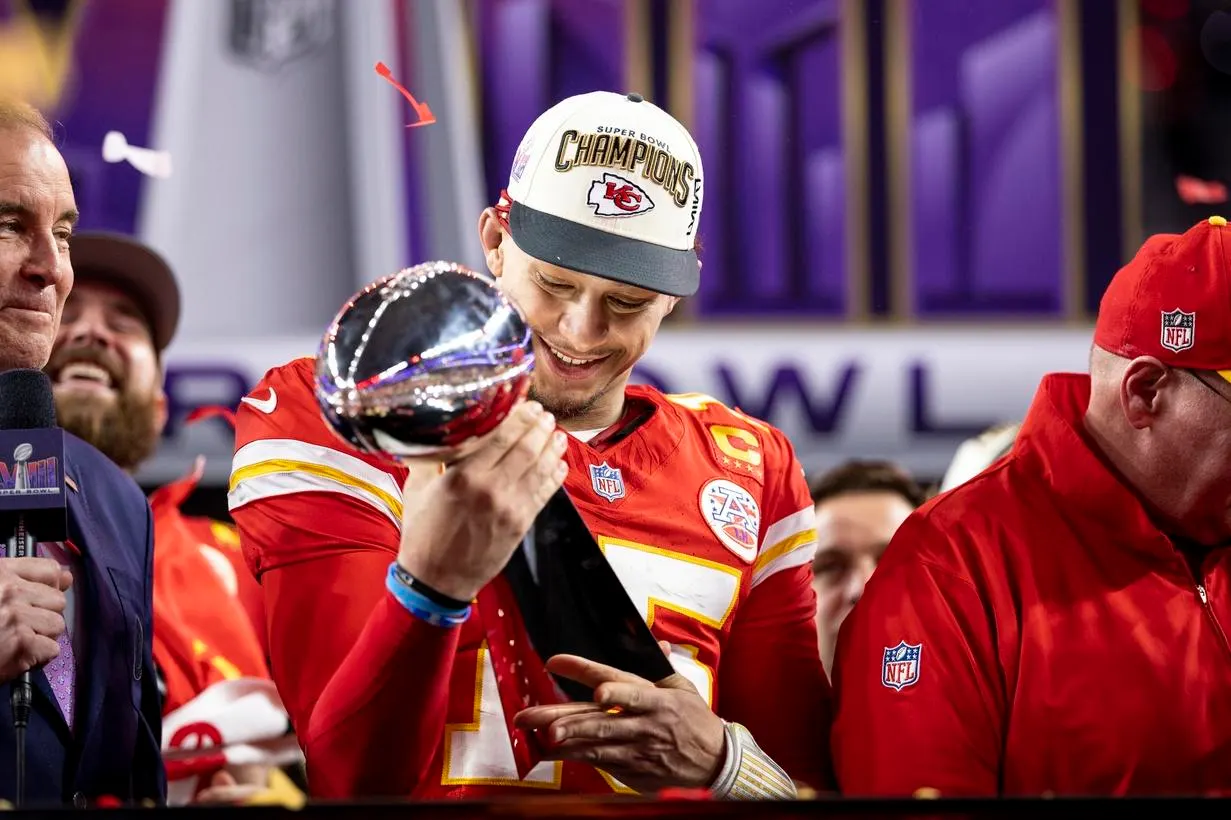
Quarterback money stops being simple when one player changes the math for an entire front office. The Mahomes contract now sits at the center of that argument because Kansas City has turned one superstar deal into a long-running cap machine, not a normal pay agreement. In June 2026, the Chiefs added two more years to his deal, tying him to Kansas City through 2033 at a reported $504.75 million base value, with incentives that could push it higher. The league’s own salary cap page lists the 2026 cap at $301.2 million, so one quarterback’s planning now touches the whole roster picture.
For fans, the real question is not whether Patrick Mahomes is worth elite money. He is. The better question is how the Chiefs keep paying him while still chasing rings, protecting the offensive line, finding receivers, and keeping enough defensive speed. That is where sports business coverage matters, because this story is less about one paycheck and more about how NFL cap space works when a team refuses to choose between today and tomorrow.
How Mahomes Contract Reshapes the Chiefs’ Cap Math
Kansas City’s plan starts with a simple belief: a great quarterback is not a budget line. He is the business model. That sounds bold until you look at how the Chiefs keep handling his money. They do not treat the deal as fixed stone. They treat it like a valve, opening cap room when they need relief and accepting larger future charges when the roster needs help now.
That approach fits the Chiefs because their window never has a clean stop sign. A normal contender may chase one two-year push, then reset. Kansas City keeps trying to extend the same era. The cap plan has to serve that idea, even when the numbers look uncomfortable from the outside.
Why Kansas City keeps moving money forward
In February 2026, the Chiefs converted $44.05 million of 2026 base salary and a $10.4 million roster bonus into a fully guaranteed roster bonus. NFL.com reported that the move created $43.56 million in cap room, dropping his 2026 cap number from $78.214 million to about $34.65 million. The same report explained the tradeoff: a simple restructure spreads bonus money across later years, so the bill does not vanish. It travels.
That move shows why fans can get fooled by a lower cap hit. A smaller number in one season can look like sacrifice, but it often means accounting, timing, and trust. Mahomes still gets paid. The Chiefs gain room to operate. Future seasons absorb the extra weight.
The non-obvious part is that this can be smart even when it looks risky. If Kansas City believes the cap will keep rising, then pushing money into later years may cost less in real roster pain. A $10 million charge hurts more when the cap is $224.8 million, as it was in 2023, than when the cap passes $300 million in 2026. The math changes with the league’s revenue engine.
The hidden tradeoff behind a friendly cap number
A friendly cap hit is not the same as a cheap player. Spotrac listed Mahomes with a 2026 cap hit of $34,653,888 and 2026 cash of $56.75 million, which tells you the whole trick in one contrast. The team can lower the accounting charge while the player still receives major cash.
Think of it like moving furniture in a packed garage. You can clear a walking path today, but the boxes still exist. Kansas City cleared a path for the 2026 roster. Later, the club must either pay the cap charge, add years, convert money again, or reshape the deal.
That is not failure. That is the design. The Chiefs know the risk, and Mahomes knows the team will keep coming back to the table. The arrangement works because both sides have rare certainty. Most teams cannot copy that. Most players are not Patrick Mahomes.
The real tradeoff sits in the middle of the roster. A lower 2026 cap number may help keep a guard, add a pass catcher, or protect depth after injuries. A higher future number may force a younger replacement into a job before he is ready. That is why cap relief should never be judged by one season alone.
Why Quarterback Contract Structure Matters More Than Average Salary
Average salary grabs headlines because it is easy to compare. It also hides too much. A quarterback can average $60 million and still have a team-friendly first-year cap hit. Another can average less and squeeze a roster because of guarantees, bonus timing, and dead money. Quarterback contract structure matters because the payment schedule often matters more than the sticker price.
This is where casual debate gets thin. Fans argue about whether a quarterback is “overpaid,” as if a deal is one number on a graphic. Front offices see layers. Signing bonus, roster bonus, workout bonus, injury protection, full guarantees, and vesting dates can all change how a deal behaves.
Cash flow tells a different story than cap hit
Cash is what the player receives. Cap charge is how the team accounts for it under league rules. Those two lines can move in different directions, and that gap is where front offices make their living. A fan sees a cap hit and asks whether the player is expensive. A cap manager asks when the cash is due, how it can be prorated, and which future years carry pressure.
Mahomes’ 2026 setup is a clean example. The public cap number sits far below the cash number, which lets Kansas City keep him paid while preserving short-term room. That does not make the deal painless. It makes the pain timed.
Here is the counterintuitive lesson: a huge deal can create more flexibility than a shorter deal if the team and player both expect to renegotiate. Long-term security gives Kansas City more years to spread bonus charges. Short contracts can force cleaner accounting, but they also give teams fewer tools when the roster gets tight.
The same idea explains why average annual value can mislead readers. A $64 million average can sound heavier than a $55 million average, yet the lower average may bite harder if the cap spikes land in the wrong years. Timing can beat headline size.
This is why smart fans track trigger dates, not only totals. A roster bonus due in May can shape free agency in March. A guarantee that vests next spring can affect a trade conversation this winter. The deal starts speaking long before the paycheck clears.
Rolling guarantees change the team-player bargain
Over The Cap’s June 2026 note described the updated agreement as an eight-year structure with two new years added, including yearly roster bonuses beginning in 2027 and guarantee mechanisms that activate ahead of future league years. That kind of setup matters because it keeps pressure on both sides without forcing a new fight every spring.
Rolling guarantees create a quiet rhythm. The player gains protection before the season arrives. The team keeps enough time to plan. It is less dramatic than a holdout, but more meaningful for roster building.
For a deeper primer, a team could pair this topic with an internal explainer such as NFL contract strategy guide. Fans do not need a law degree to follow the point. Guarantees decide who carries risk, and timing decides when that risk hits the roster.
The bargain also protects the relationship. Mahomes gets proof that Kansas City will keep paying him near the top of the market. The Chiefs get a path to avoid a yearly public standoff. In a league where quarterback tension can poison a season, quiet agreement has real value.
What This Means for the Chiefs Salary Cap Around the Roster
The Chiefs salary cap picture starts with Mahomes, but it does not end there. Elite quarterback spending forces a sharper answer at every other position. Kansas City cannot shop like a team with a rookie passer. It must pick where to pay, where to draft, and where to let a good player leave before emotion beats math.
The tension is familiar to any fan who has watched a champion age. The names people love become expensive. The replacements arrive before the crowd trusts them. The front office has to make cold choices while the locker room still believes another title is possible.
Stars get protected before depth gets paid
The Chiefs’ real roster rule is plain: protect the engine first. That means the quarterback, pass protection, and enough defensive talent to avoid shootouts every week. When Chris Jones carries a major charge and Mahomes carries a major long-term commitment, the middle class of the roster feels the squeeze first.
That squeeze is not always visible in March. It shows up in August, when a veteran swing tackle costs more than expected, or in November, when an injury exposes a thin position group. Fans blame one missed signing. The cap story often started months earlier.
Kansas City’s advantage is that Andy Reid and Brett Veach have built a culture where role players can survive inside defined jobs. That helps. It does not erase the math. A top-heavy roster needs young players to produce before they get paid.
That is why a cheap fourth corner or a rookie wideout can matter as much as a famous signing. On a roster tied to an elite passer, value often comes from the quiet spots. The Chiefs do not need every young player to become a star. They need enough of them to become playable on schedule.
The best comparison is not luxury spending. It is margin control. Kansas City can afford a few expensive anchors, but it cannot afford too many replacement-level snaps from players who were supposed to be bargains. The cap plan and the player-development plan have to move together.
Draft misses become more expensive under a top-heavy plan
Every team needs draft hits. A team paying a record-setting quarterback needs them with less room for error. If a second-round receiver fails, the Chiefs may need to buy a veteran. If a young tackle stalls, protection gets expensive fast. If two defensive backs miss, the back end turns into a shopping list.
That is why salary cap roster planning should never be treated as a spreadsheet hobby. It is football strategy. A cap plan decides how much patience a team can afford with a raw player, how much injury insurance it can carry, and whether it can keep a locker-room leader who is no longer cheap.
The surprise is that Mahomes’ big number may push Kansas City toward better discipline. When a team has endless room, it can cover mistakes with spending. When the quarterback takes a large share, the front office must be cleaner. Bad sentiment gets costly.
There is a ruthless side to that discipline. A good player can leave even when the team likes him. A veteran can become too costly a year before fans agree. The cap does not care about nostalgia, and contenders that learn that early usually last longer.
How NFL Cap Space Thinking Changes for Other Teams
NFL cap space is not equal across teams, even when the dollar amount looks the same. Ten million in room means one thing for a rebuilding club with a young quarterback. It means something else for a contender with a Hall of Fame-level passer, aging stars, and Super Bowl expectations. Mahomes has become the league’s loudest case study in that difference.
This is why general managers talk about windows, not seasons. A club can win one spring by moving money around. Winning several springs takes sharper judgment. Kansas City’s plan asks a question other teams must answer before copying it: is your quarterback good enough to make future pain worth it?
The copycat lesson is not as simple as “pay your quarterback”
Other teams will study Kansas City and see the trophy case. That is dangerous. The Chiefs are not winning because they pay a quarterback. They win because they pay the right quarterback, keep the offense stable, and accept that some popular players will leave.
A weaker front office can copy the payment style and miss the discipline behind it. That is how a team ends up with a massive quarterback charge, a thin offensive line, and no cheap speed. The form looks similar. The outcome does not.
The better lesson is harder: only push money forward when the player is worth building around across many seasons. For a middle-tier quarterback, restructures can trap a team in hope. For Mahomes, they buy more shots at January football.
The same warning applies to young passers who flash for one season. Paying early can work, but only if the team knows what it has. If the evaluation is wrong, the cap becomes an anchor tied to a guess.
Front offices now build escape routes before problems arrive
Modern teams do not wait for a cap crisis. They build exits, conversion rights, roster-bonus dates, option windows, and future triggers before the pressure arrives. The best deals are not the ones that look clean on announcement day. They are the ones that still work after injuries, market jumps, and draft surprises.
Mahomes’ 2026 rework also shows how quickly the market moves. AP reported that the new agreement raised the total value past half a billion dollars and followed other quarterback deals that reset the top of the market. The Chiefs were not acting in isolation. They were defending their franchise center in a market that keeps climbing.
That matters for teams like Cincinnati, Buffalo, Baltimore, Philadelphia, and Houston. Once a star passer becomes the roster’s center, the cap plan must be built years ahead. Waiting until the bill arrives is how contenders become trapped.
The next wave of NFL deals will likely include more built-in adjustment points. Teams want flexibility. Players want protection. The cleanest agreements will give both sides enough reason to avoid drama while the cap keeps growing.
Conclusion
The cleanest way to read Kansas City’s plan is not as generosity, savings, or cap magic. It is a long bet on one rare player. The Chiefs are saying that Mahomes gives them enough certainty to accept accounting pressure that would scare other teams.
The Mahomes contract also tells the rest of the NFL where roster building is heading. Quarterbacks at the top of the sport will keep taking larger shares of the cap, and teams will keep answering with longer timelines, bonus conversions, and rolling guarantees. The winners will not be the teams that hide the bill forever. No one can. The winners will be the teams that know which bills are worth carrying.
For Kansas City, the answer is obvious. Pay the quarterback, protect the roster’s spine, draft well, and keep tomorrow close enough that today can still breathe. The hard part is not believing in Mahomes. The hard part is staying honest about every cost that follows him. That is the new championship math.
Frequently Asked Questions
How does Patrick Mahomes’ deal affect the Kansas City Chiefs cap?
It gives Kansas City short-term room when money is converted into bonus form, but it can raise future charges. The Chiefs can keep building around him now, yet they must plan several seasons ahead so later cap numbers do not crowd out starters.
Why do NFL teams restructure quarterback deals?
Teams restructure deals to lower the current cap hit by converting salary or bonuses into prorated bonus money. The player often still gets paid on schedule. The team gains room now, while future years take on extra accounting weight.
Is Patrick Mahomes taking less money for the Chiefs?
Not in the simple way fans often mean. His cap hit can fall in a given year while his cash stays high. That is not a pay cut. It is a timing move that helps the team manage the accounting side.
What is dead money in an NFL quarterback deal?
Dead money is cap cost that remains after a player leaves or a deal changes. It comes from bonus money and guarantees already committed. Huge quarterback deals can carry major dead money, which makes a clean exit hard.
Why does the NFL salary cap keep rising?
League revenue growth drives the cap upward, especially from media deals, sponsorships, and shared football income. The 2026 cap passed $300 million per club, which gave teams more room but also pushed player prices higher.
Can other teams copy Kansas City’s cap approach?
They can copy parts of it, but the player matters. Pushing money forward works best when the quarterback is a long-term championship anchor. Using the same approach for an uncertain passer can leave a team paying for hope after the window closes.
Does a high quarterback cap hit hurt the defense?
It can. A large quarterback charge reduces room for veteran defenders, depth, and injury cover. Smart drafting can soften the hit, but expensive quarterback years usually force hard choices at pass rush, cornerback, or linebacker.
What should fans watch next in Kansas City’s cap plan?
Watch future roster bonuses, offensive line spending, defensive extensions, and draft results. Those details reveal whether the Chiefs can keep enough talent around Mahomes while his future cap numbers rise.